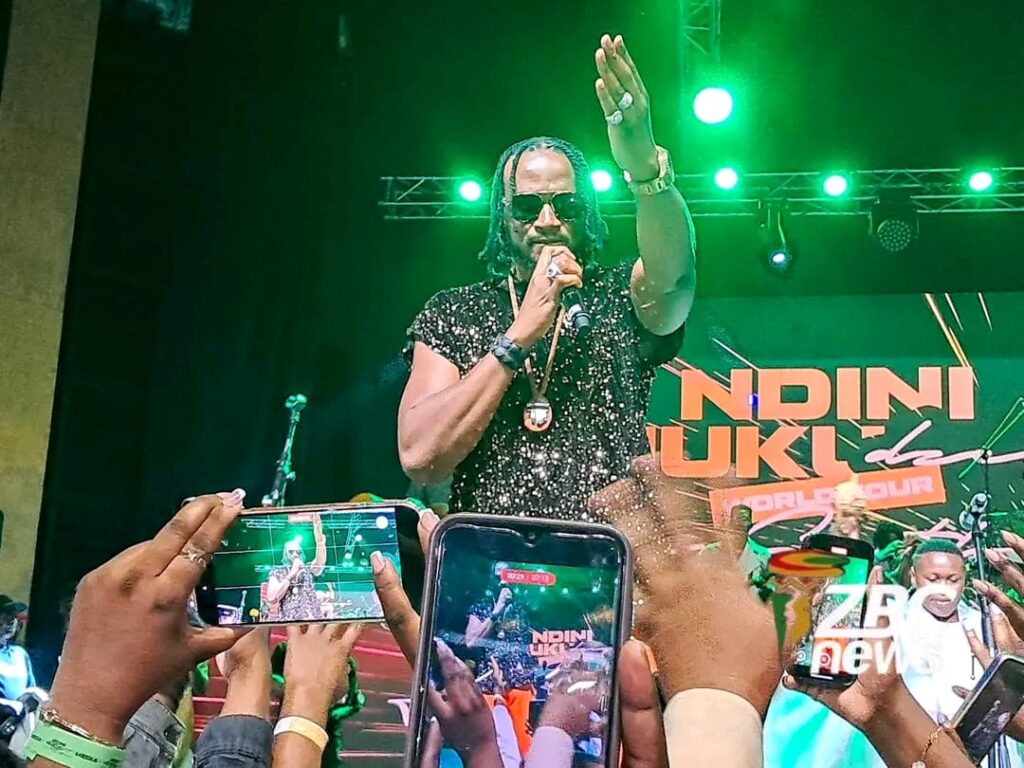
Jah Prayzah didn’t just release an album in Ndini Mukudzei; he issued a manifesto. This confident, unapologetic reminder of his reign—wrapped in an album cover featuring his illustrious discography—makes the message clear: He is demanding his flowers while he can still smell them. He isn’t just asking for respect; he is auditing his own legacy and daring anyone to find it lacking.
The Anthem of Authority
1) Ndini Mukudzei the title track is the album’s core thesis. It isn’t a plea; it’s a powerful ultimatum. Jah Prayzah throws down a direct challenge to the listener: “Look at my body of work. Now, give me the respect I am due.” It is a moment of necessary arrogance, reminding the industry that while they might be chasing the “next big thing,” they are still in the presence of a master.
The Wisdom of the Journey
2) Necessary Here, JP pivots from ego to ethics. “Necessary” is a meditation on the fragility of time. It serves as a warning against the toxicity of grudges and the weight of spoken words. By encouraging listeners to find less hurtful ways to navigate conflict, he frames life as too short for the friction of minor misunderstandings.
3) Shuga Providing a much-needed sonic break, “Shuga” is pure celebration. It captures the essence of a perfect day—drinking, laughter, and camaraderie. The hypnotic repetition of the chorus mimics the “sweetness” of the moment, serving as a reminder that even a King needs to let his hair down.
4) Kwaunobva In a world obsessed with the “next,” JP uses “Kwaunobva” to pull us back to our roots. This track is a soulful exploration of identity, arguing that one’s ultimate blessings are not found in distant lands, but in the soil and the ancestry they came from.
The Spiritual and the Sacred
5) Kuno This is a tragically beautiful track that serves as the album’s emotional anchor. By personifying the spirit of the departed, JP offers a message of comfort to the bereaved. With references to a “city of gold” and a King who knows every name, the track transforms grief into a hopeful transition, assuring us that the afterlife is a place where sorrow cannot reach.
6) Manja JP becomes the village elder in “Manja.” He addresses the universal question of why some prosper while others struggle. His answer is a cultural sermon: gratitude. The track suggests that success is not just about effort, but about the spiritual act of “putting your hands together” in thankfulness.
7) Ruzhowa In “Ruzhowa” (The Protective Fence), we see the artist at his most vulnerable. Presented as a prayer, he asks for divine sanctuary against those who scheme in the shadows. It is a plea for elevation—to be lifted from the dust and placed in “gardens” among people of substance.
The Human and the Humorous
8) Ibvo This is the album’s most humanizing confession. It’s a cheeky look at a man caught between reason and temptation—the kind of love that makes you send airtime you don’t actually have. It strips away the “Soldier” persona and reveals the relatable chaos of the human heart.
9) Hubaba JP turns his lens toward the heavy mantle of fatherhood. “Hubaba” exposes the quiet, often exhausting pressure of being a provider. It’s a sobering tribute to the sacrifices made by fathers to keep their families afloat.
10) Chiramu Venturing into more controversial territory, “Chiramu” uncovers the complex and sometimes uncomfortable social dynamics of in-law relationships. It serves as a cultural commentary on boundaries, tradition, and the tensions that exist within the extended family unit.
Beauty and Defiance
11) Chiringiro A vibrant celebration of “Black Pride,” this track is a love letter to the black woman. JP encourages his subject to look into the mirror (Chiringiro) and embrace the radiance of her skin, turning a simple song into an anthem of self-love and cultural confidence.
12) Sori JP uses “Sori” to address his detractors with biting irony. He “apologizes” to his enemies for his continued success, asking for eyes that can see those who hate him for no reason other than his winning streak. It’s a masterclass in the “apologetic flex.”
13) Moto Closing the circuit is “Moto” (Fire). This track represents the “heat” of JP’s unstoppable momentum. If the rest of the album is about his history, “Moto” is about his current energy—a burning, high-octane proof that his creative fire is far from extinguished. It is the sound of an artist who is still, very much, ablaze.
Final Verdict
Ndini Mukudzei is more than an album; it is a ledger of a decade of dominance. Whether he is praying for protection, laughing at his own romantic follies, or demanding his crown, Jah Prayzah remains the undisputed architect of the modern Zimbabwean sound